
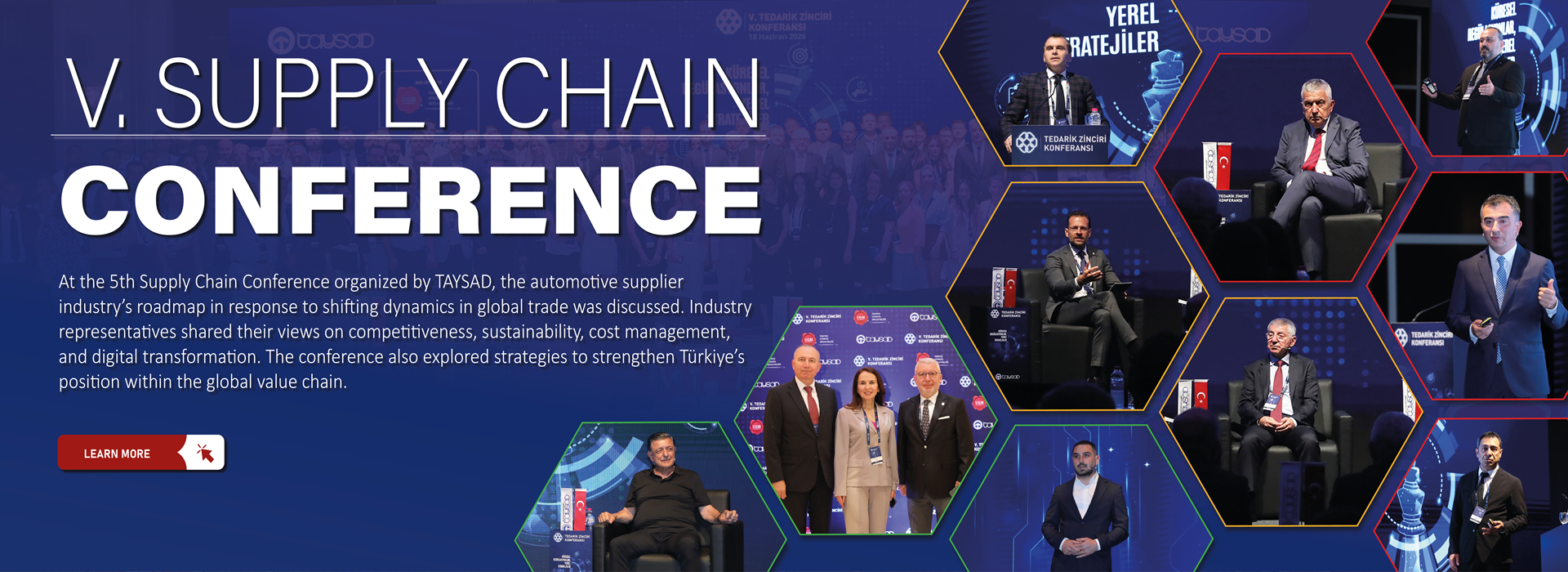
Automotive Supply Industry Discusses New Roadmap Against Global Risks
Global trade is going through a new period of disruption. Geopolitical risks are increasing, cost pressures are deepening, and competitive conditions are rapidly evolving. These developments were discussed from different perspectives at the 5th Supply Chain Conference organized by TAYSAD. Held under the theme “Global Regulations, Local Strategies,” the event brought together industry stakeholders to discuss the future of supply chains. New strategies focused on efficiency, digitalization, and sustainability came to the forefront, while the global competitiveness of the Turkish automotive supply industry was reassessed.
The opportunities and challenges facing the Turkish automotive supply industry were comprehensively addressed at the 5th Supply Chain Conference organized by the Automotive Suppliers Association of Türkiye (TAYSAD). Held on June 18, 2026, at Crowne Plaza Istanbul Asia, the event brought together industry stakeholders under the theme “Global Regulations, Local Strategies.” While the industry's current vulnerabilities and future transformation needs were discussed in various sessions, the impact of geopolitical developments on production networks, cost management, sustainability, and digitalization formed the main agenda of the conference.
“Türkiye Must Preserve Its Strategic Position in Europe's Value Chain”
Speaking at the event, Yakup Birinci, Chairman of the Board of TAYSAD, emphasized the strategic role of the automotive supply industry within the global system.
“Today, the global automotive industry is shaped not only by production technologies but also by trade policies. The European Union’s new industrial policies, the ‘Made in EU’ approach, and increasingly protectionist trends around the world are redefining the competitive landscape of our industry. We observe that the transformation process initiated to combat climate change is now influencing trade policies as well. However, the evolution of this transformation from environmental objectives toward practices that may sometimes limit competition is a development that should be monitored carefully. Therefore, it is of great importance for Türkiye to preserve its strategic position within Europe’s value chain, strengthen industrial diplomacy, and act with a shared vision across the sector. We regard the 5th Supply Chain Conference as an important platform where we evaluate changing global dynamics together with all stakeholders and discuss both risks and opportunities from a common perspective,” he said.
“Approximately 85% of Our Exports Are Directed to the European Market”
Speaking at the panel titled “Automotive Industry in the New Axis of Global Trade,” Kemal Yazıcı, Chairman of the Board of the Uludağ Automotive Industry Exporters' Association (OİB), stated:
“The transformation taking place in the automotive industry is fundamentally driven by policies aimed at reducing carbon emissions and achieving carbon neutrality targets by 2050. While significant progress has been made in emission reduction in recent years, this transformation has now evolved into a new era directly affecting trade policies and global competition. Approximately 85% of our automotive exports are directed to the European market. Therefore, new regulations implemented in Europe, carbon border adjustment mechanisms, and localization policies are of strategic importance for our industry. Strengthening green transformation investments through public incentives and financing mechanisms will be one of the most important steps in ensuring the long-term success of our sector in global markets.”
“Structural Transformations That Increase Efficiency Must Be Accelerated”
Cengiz Eroldu, Chairman of the Board of The Automotive Manufacturers Association (OSD), commented:
“The transformation taking place in the global automotive industry is redefining not only production technologies but also trade policies. While protectionist policies adopted by various countries may seem supportive for certain sectors in the short term, we believe they carry the risk of weakening competitiveness in the long run. The Turkish automotive industry is an important and complementary part of Europe’s manufacturing and R&D ecosystem. Preserving this strong integration is critical for the competitiveness of both Türkiye and Europe. To maintain our competitive advantage in the coming years, structural transformations that improve efficiency must be accelerated, and our automotive ecosystem should be positioned to benefit more effectively from economies of scale. In the face of changing global dynamics, the path to competitiveness lies not in protectionism, but in a strong industrial infrastructure, productivity, and international cooperation.”
Cost Management and Sustainability Took Center Stage
The conference opened with speeches by TAYSAD Board Members Tülay Hacıoğlu Şengül and Reha Gür. Economist Bader Arslan then shared his assessment of the impact of the global economic outlook on the Turkish automotive supply industry.
During the event, Mustafa Cem Kulu, Deputy General Manager of Finance and Administrative Affairs at Toyota, delivered a presentation on “Cost Management,” while Bahadır Gültekin, Sustainability and Occupational Health & Safety Manager at Toyotetsu, addressed “Auditing Suppliers within the Scope of Scope 3 Emissions.” Dr. Faruk Şen, Deputy General Manager of Ünsped Customs Consultancy and Logistics Services Inc., contributed with a presentation titled “Türkiye in the Face of the EU’s Expanding Free Trade Agreement Network: Asymmetric Preferences and Cost Management.”
In the second part of the program, Yakup Birinci, Kemal Yazıcı, and Cengiz Eroldu participated in the panel “Protectionism or Transformation? The Automotive Industry in the New Axis of Global Trade.” The panel explored the sector’s future risks, opportunities, and transformation areas from different perspectives.
The event also featured a presentation by Buğra Bingöl, Logistics Manager at Beyçelik Gestamp, titled “Autonomous Transformation in Intralogistics: AGV Technology.” The program concluded with a special session featuring Bülent Yazıcı, Treasurer of TAYSAD, and well-known football figure Yılmaz Vural.
The 5th TAYSAD Supply Chain Conference was held with the support of main sponsor Ünsped Customs Consultancy and Logistics Services Inc., gold sponsor Cevher Wheel Manufacturing Inc., and bronze sponsors Sistem Global Quandatum and L.I.T. Logistics Services Ltd. Co. The event successfully concluded after addressing the automotive supply industry’s transformation agenda, changes in global trade, and future strategies from multiple perspectives.
Global trade is going through a new period of disruption. Geopolitical risks are increasing, cost pressures are deepening, and competitive conditions are rapidly evolving. These developments were discussed from different perspectives at the 5th Supply Chain Conference organized by TAYSAD. Held under the theme “Global Regulations, Local Strategies,” the event brought together industry stakeholders to discuss the future of supply chains. New strategies focused on efficiency, digitalization, and sustainability came to the forefront, while the global competitiveness of the Turkish automotive supply industry was reassessed.
The opportunities and challenges facing the Turkish automotive supply industry were comprehensively addressed at the 5th Supply Chain Conference organized by the Automotive Suppliers Association of Türkiye (TAYSAD). Held on June 18, 2026, at Crowne Plaza Istanbul Asia, the event brought together industry stakeholders under the theme “Global Regulations, Local Strategies.” While the industry's current vulnerabilities and future transformation needs were discussed in various sessions, the impact of geopolitical developments on production networks, cost management, sustainability, and digitalization formed the main agenda of the conference.
“Türkiye Must Preserve Its Strategic Position in Europe's Value Chain”
Speaking at the event, Yakup Birinci, Chairman of the Board of TAYSAD, emphasized the strategic role of the automotive supply industry within the global system.
“Today, the global automotive industry is shaped not only by production technologies but also by trade policies. The European Union’s new industrial policies, the ‘Made in EU’ approach, and increasingly protectionist trends around the world are redefining the competitive landscape of our industry. We observe that the transformation process initiated to combat climate change is now influencing trade policies as well. However, the evolution of this transformation from environmental objectives toward practices that may sometimes limit competition is a development that should be monitored carefully. Therefore, it is of great importance for Türkiye to preserve its strategic position within Europe’s value chain, strengthen industrial diplomacy, and act with a shared vision across the sector. We regard the 5th Supply Chain Conference as an important platform where we evaluate changing global dynamics together with all stakeholders and discuss both risks and opportunities from a common perspective,” he said.
“Approximately 85% of Our Exports Are Directed to the European Market”
Speaking at the panel titled “Automotive Industry in the New Axis of Global Trade,” Kemal Yazıcı, Chairman of the Board of the Uludağ Automotive Industry Exporters' Association (OİB), stated:
“The transformation taking place in the automotive industry is fundamentally driven by policies aimed at reducing carbon emissions and achieving carbon neutrality targets by 2050. While significant progress has been made in emission reduction in recent years, this transformation has now evolved into a new era directly affecting trade policies and global competition. Approximately 85% of our automotive exports are directed to the European market. Therefore, new regulations implemented in Europe, carbon border adjustment mechanisms, and localization policies are of strategic importance for our industry. Strengthening green transformation investments through public incentives and financing mechanisms will be one of the most important steps in ensuring the long-term success of our sector in global markets.”
“Structural Transformations That Increase Efficiency Must Be Accelerated”
Cengiz Eroldu, Chairman of the Board of The Automotive Manufacturers Association (OSD), commented:
“The transformation taking place in the global automotive industry is redefining not only production technologies but also trade policies. While protectionist policies adopted by various countries may seem supportive for certain sectors in the short term, we believe they carry the risk of weakening competitiveness in the long run. The Turkish automotive industry is an important and complementary part of Europe’s manufacturing and R&D ecosystem. Preserving this strong integration is critical for the competitiveness of both Türkiye and Europe. To maintain our competitive advantage in the coming years, structural transformations that improve efficiency must be accelerated, and our automotive ecosystem should be positioned to benefit more effectively from economies of scale. In the face of changing global dynamics, the path to competitiveness lies not in protectionism, but in a strong industrial infrastructure, productivity, and international cooperation.”
Cost Management and Sustainability Took Center Stage
The conference opened with speeches by TAYSAD Board Members Tülay Hacıoğlu Şengül and Reha Gür. Economist Bader Arslan then shared his assessment of the impact of the global economic outlook on the Turkish automotive supply industry.
During the event, Mustafa Cem Kulu, Deputy General Manager of Finance and Administrative Affairs at Toyota, delivered a presentation on “Cost Management,” while Bahadır Gültekin, Sustainability and Occupational Health & Safety Manager at Toyotetsu, addressed “Auditing Suppliers within the Scope of Scope 3 Emissions.” Dr. Faruk Şen, Deputy General Manager of Ünsped Customs Consultancy and Logistics Services Inc., contributed with a presentation titled “Türkiye in the Face of the EU’s Expanding Free Trade Agreement Network: Asymmetric Preferences and Cost Management.”
In the second part of the program, Yakup Birinci, Kemal Yazıcı, and Cengiz Eroldu participated in the panel “Protectionism or Transformation? The Automotive Industry in the New Axis of Global Trade.” The panel explored the sector’s future risks, opportunities, and transformation areas from different perspectives.
The event also featured a presentation by Buğra Bingöl, Logistics Manager at Beyçelik Gestamp, titled “Autonomous Transformation in Intralogistics: AGV Technology.” The program concluded with a special session featuring Bülent Yazıcı, Treasurer of TAYSAD, and well-known football figure Yılmaz Vural.
The 5th TAYSAD Supply Chain Conference was held with the support of main sponsor Ünsped Customs Consultancy and Logistics Services Inc., gold sponsor Cevher Wheel Manufacturing Inc., and bronze sponsors Sistem Global Quandatum and L.I.T. Logistics Services Ltd. Co. The event successfully concluded after addressing the automotive supply industry’s transformation agenda, changes in global trade, and future strategies from multiple perspectives.
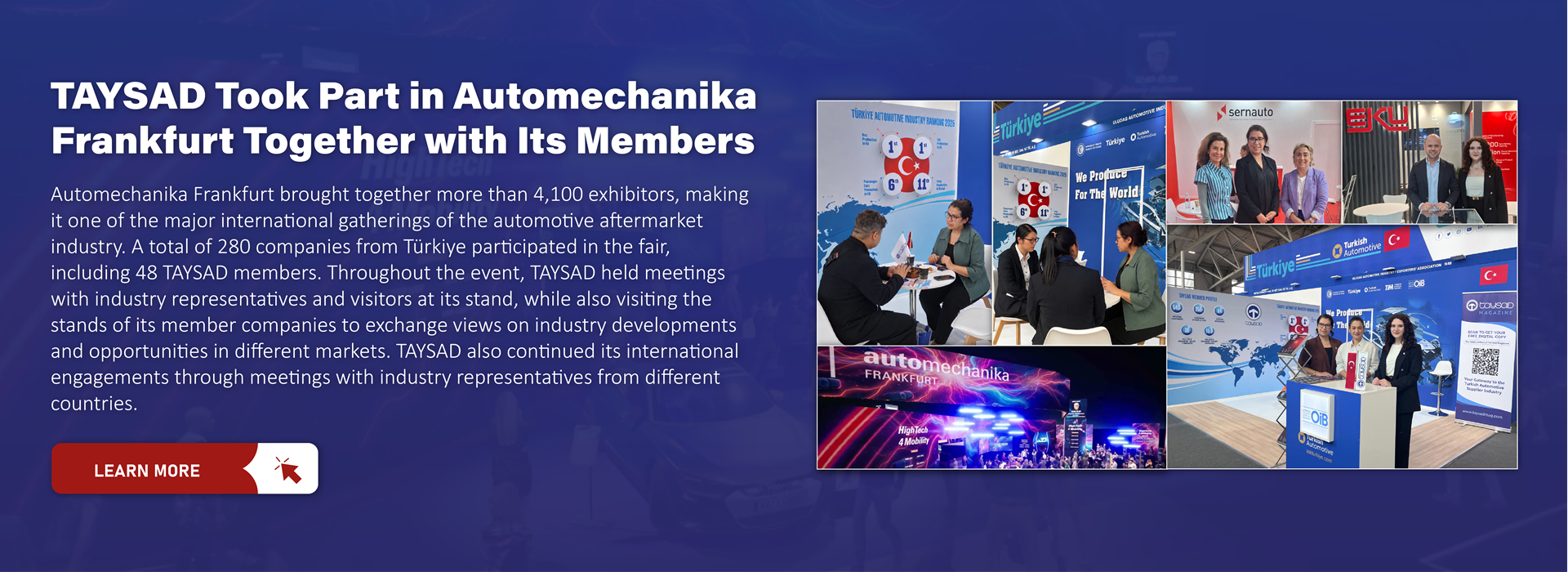
TAYSAD Took Part in Automechanika Frankfurt Together with Its Members
29 September 2026, Tuesday 13:24

Countdown for Automotive Industry, International Automotive Engineering Conference (IAEC) 2026!
25 August 2026, Tuesday 13:14
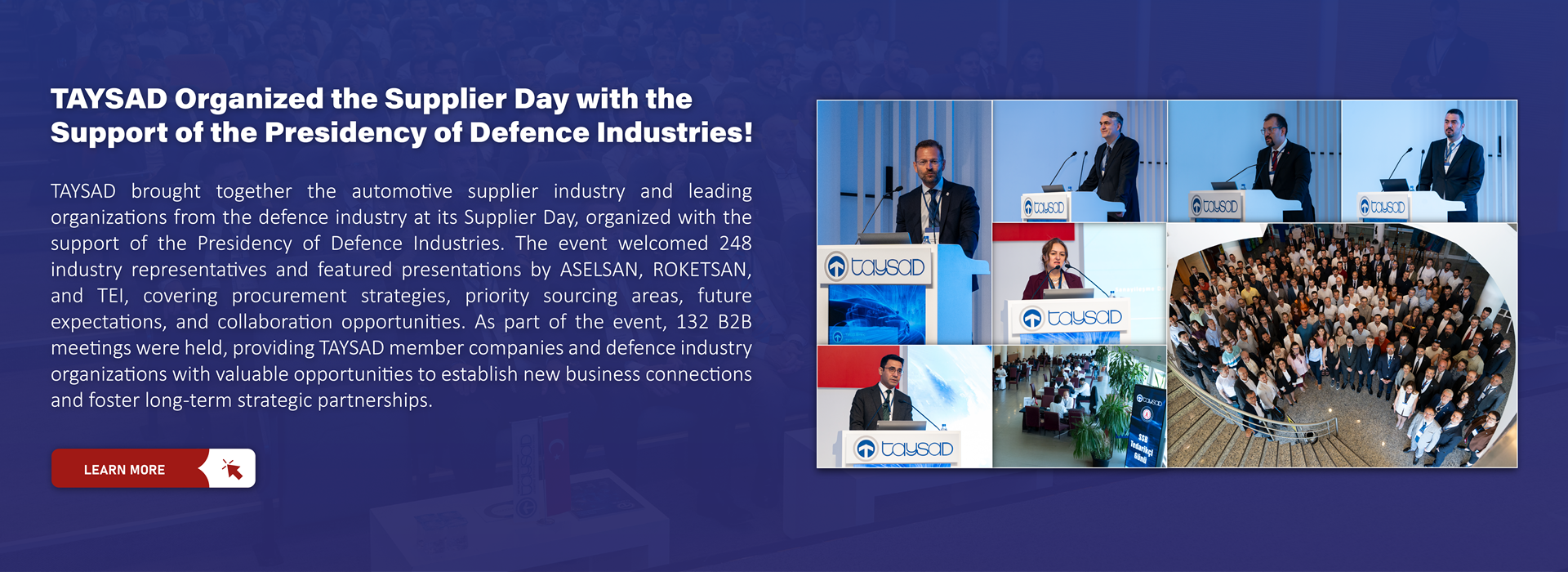
TAYSAD Organized the Supplier Day with the Support of the Presidency of Defence Industries
01 July 2026, Wednesday 15:53
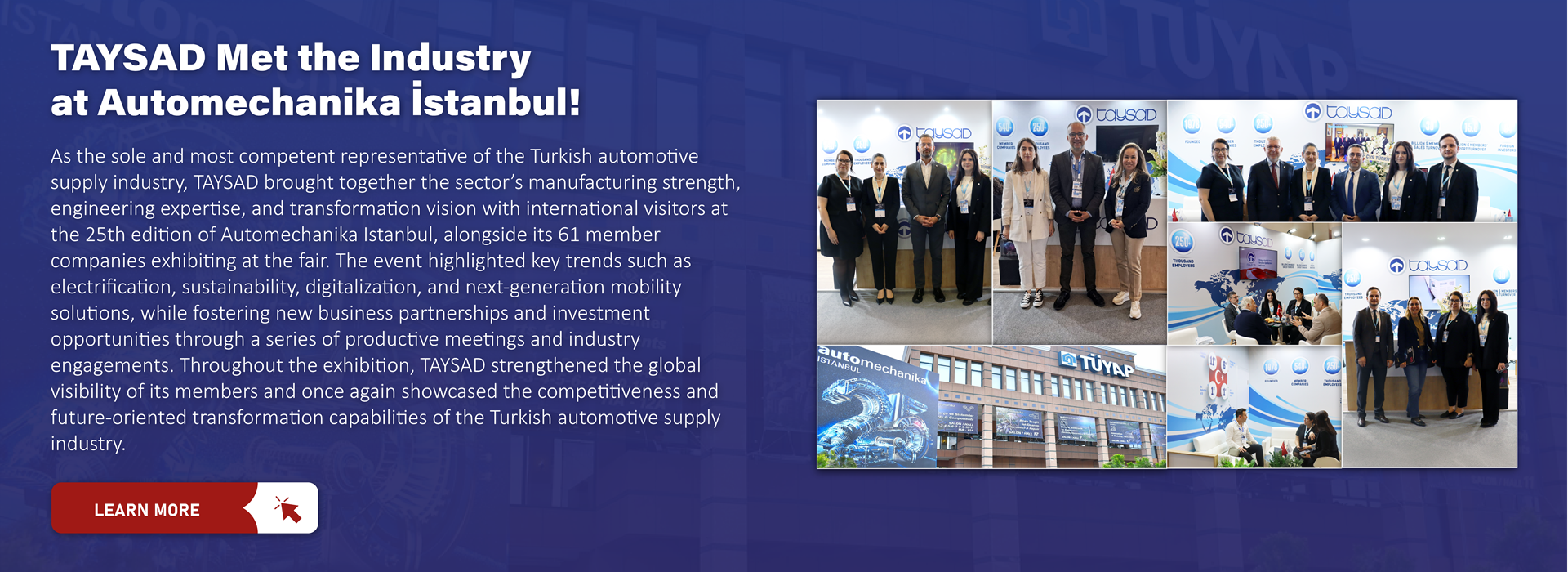
TAYSAD Meets the Industry at Automechanika İstanbul
01 June 2026, Monday 11:58
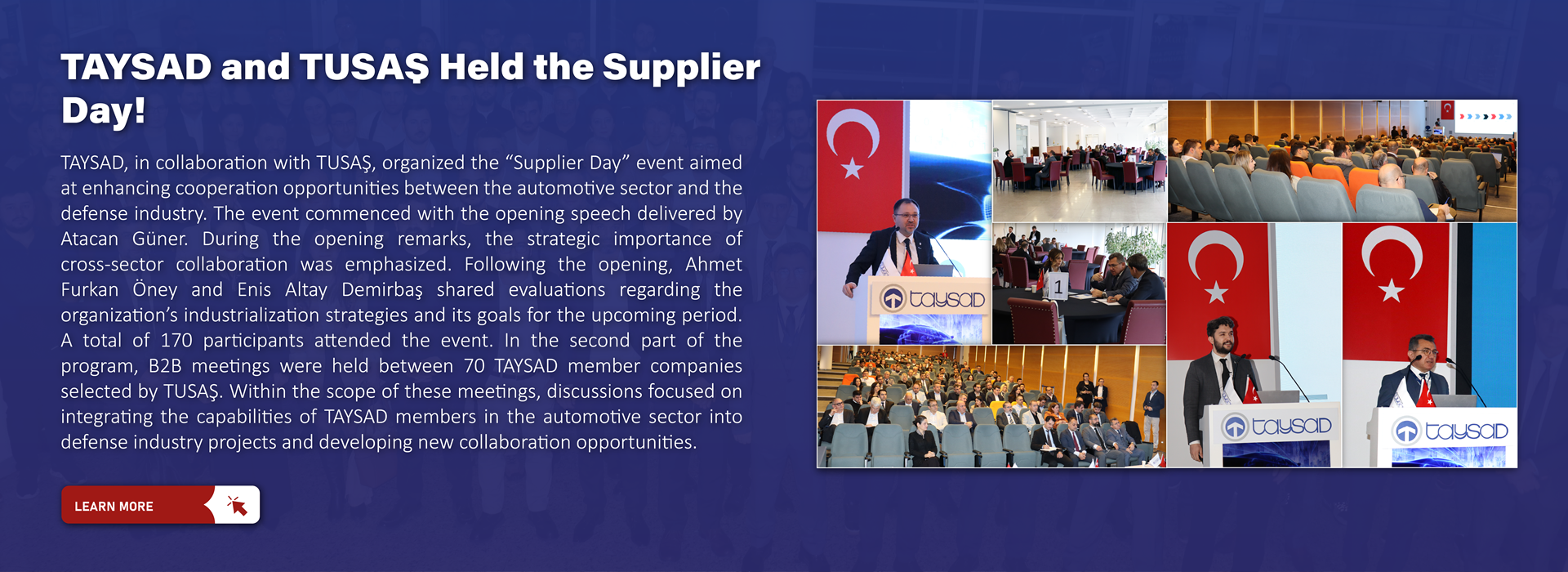
TAYSAD and TUSAŞ Held the Supplier Day Event
13 April 2026, Monday 13:40